

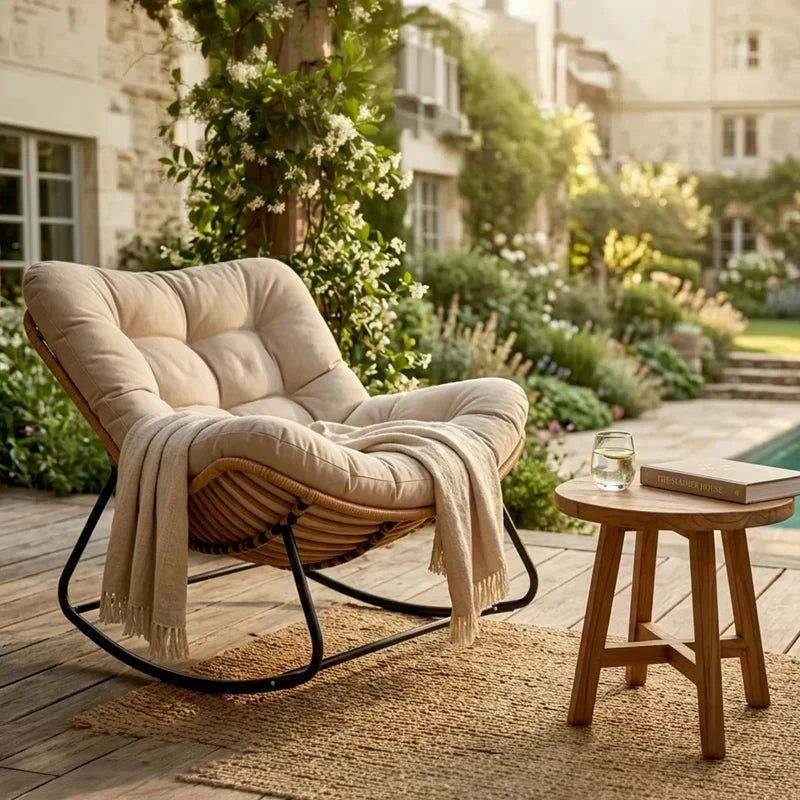


A well-made outdoor space is a room in its own right. And within it, an outdoor rocking chair does something no other seat quite manages: that slow, steady sway turns five minutes outside into a proper pause.
But choosing one for a British patio takes a bit of thought. Sun, rain, damp, frost, outdoor conditions rule out poorly made models straight away. Materials, style, comfort, budget: here's how to get it right first time.
An outdoor rocking chair turns a patio into somewhere you actually want to sit.
Garden furniture isn't exactly in short supply. So why choose a rocking chair specifically?
A rocking chair offers something no other outdoor seat can: steady, rhythmic movement. That slow rock settles the nervous system and quietens a busy head. Outdoors, the effect only deepens — birdsong, a breeze, natural light and a chair that keeps time with all of it.
Unlike a sun lounger or a stacking chair, a good outdoor rocking chair is genuinely nice to look at. It gives a patio a focal point and a bit of character. In woven rattan, powder-coated aluminium or solid teak, it makes the space look better as well as feel better.
A well-chosen outdoor rocker suits a quiet morning coffee just as well as drinks with friends. Used properly, it's a long-term buy rather than a seasonal one.
This is the question that matters most. An outdoor chair faces things its indoor counterpart never will: UV, damp, rain, temperature swings, the occasional frost. Each material handles them differently.
Woven high-density polyethylene that convincingly mimics natural rattan while being waterproof and UV-stable. Where natural rattan goes brittle in damp and fades in sun, synthetic rattan keeps its colour and flex season after season, with almost no upkeep.
The workhorse of demanding outdoor spaces. Light, rust-proof, won't warp, handles weather without complaint. Marine-grade aluminium with an epoxy finish holds up even near the coast or beside a pool.
The benchmark for high-end garden furniture. Naturally oil-rich, it resists damp and mould without chemical treatment. A teak rocker has a warmth and permanence that synthetics can't quite match.
Certified hardwoods offering good natural resistance at a friendlier price than teak. Their warm grain and golden tone sit beautifully in natural or Scandi-leaning gardens.
| Material | Weather resistance | Upkeep | Style | Best for |
|---|---|---|---|---|
| Synthetic rattan | Very good (UV, rain, chlorine) | Soapy water | Natural, Mediterranean, boho | Patio, poolside |
| Treated aluminium | Excellent (all conditions) | Damp cloth | Contemporary, minimal | Balcony, modern patio, coastal |
| Solid teak | Very good (naturally oiled) | Oil once a year | Classic, premium | Garden, conservatory, decking |
| FSC acacia / eucalyptus | Good | Oil once or twice a year | Natural, outdoor Scandi | Garden, lawn, covered space |
← Swipe to see the full table
On a hard surface, look for wide, non-slip runners. Powder-coated aluminium or synthetic rattan on an aluminium frame works well, paired with a quick-drying outdoor cushion.
On grass, wide runners stop the chair sinking. Solid teak or acacia suit this best — the weight keeps things stable on uneven ground, and the material sits naturally in a garden setting.
Weight and footprint are everything. A compact aluminium rocker gives you comfort without crowding the space. Allow for the rocking travel (around 35cm front to back) and check your balcony's load limits before buying.
Chlorine and constant damp demand maximum resistance. Choose synthetic rattan or marine-grade aluminium with ultra-quick-drying outdoor fabric. Avoid untreated wood entirely — it degrades fast in these conditions.
Semi-outdoor means you can be a bit more indulgent. Solid teak or woven rattan brings warmth to a conservatory while coping happily with the humidity swings these spaces bring.
Outdoor design now follows indoor trends closely: natural, durable and good-looking wins.
Woven synthetic rattan on an aluminium frame is the clearest expression of this look. Organic texture, warm feel — very much at home on Mediterranean-leaning patios. Pair with natural-toned cushions in beige, terracotta or sage.
Powder-coated aluminium in anthracite, matt white or pale grey suits patios with clean geometric lines. With monochrome cushions and minimal decor, it lifts almost any space.
Solid teak or acacia gives a patio a timeless character. Golden tones, visible grain, honest materials — ideal for country gardens, older houses and conservatories.
| Patio style | Recommended material | Cushion colours |
|---|---|---|
| Mediterranean / boho | Synthetic rattan | Beige, terracotta, olive |
| Contemporary / minimal | Powder-coated aluminium | White, anthracite, black |
| Classic / country | Solid teak or acacia | Natural, ecru, pale blue |
Prices vary enormously depending on materials, brand and finish. Here's an honest guide.
| Price range | What you get | Watch out for |
|---|---|---|
| Under £130 | Basic frame, low-density materials | Short lifespan, uncomfortable |
| £130–£300 | Decent synthetic rattan or aluminium, cushions included | Quality varies a lot by brand |
| £300–£600 | Teak, quality aluminium, premium rattan, proper outdoor cushions | The sweet spot for regular use |
| £600+ | Certified solid teak, marine aluminium, premium finishes | A 15–20 year investment |
Our honest recommendation: don't go below around £250 for a chair you'll use regularly. Material quality and cushion construction are what separate a chair that lasts five seasons from one that doesn't survive two.
A good outdoor rocker isn't just about materials. How it feels to sit in decides whether you actually use it.
Synthetic rattan and aluminium: a rinse with soapy water is all it needs. No special treatment, even after winter.
Teak and acacia: natural oil (teak or linseed) once or twice a year feeds the fibres and keeps the warm tone. Left untreated, the wood weathers to a silvery grey — which plenty of people prefer.
Outdoor cushions: bring them in during prolonged wet weather. Wash covers per the manufacturer's instructions.
Over winter: use a protective cover during frost or long periods of disuse, and store cushions indoors to protect the filling.
It depends on the material. Treated aluminium or synthetic rattan will cope outdoors year-round without issue. For solid wood (teak, acacia), a winter cover significantly extends its life. Either way, bring cushions in or cover them in bad weather.
On a slight incline, choose a model with wide, non-slip runners. Some have adjustable feet to compensate for minor unevenness.
Outdoor cushions use hydrophobic filling and quick-drying fabric, so they cope with rain and damp. For extended wet spells, bringing them in is still the sensible move.
Go compact. Lightweight aluminium or synthetic rattan with a small footprint. Check exact dimensions and allow 35–40cm front and back for the rocking travel.
Synthetic, without much doubt. Poly-rattan holds its colour and flexibility season after season with no upkeep, where natural rattan goes brittle in damp and fades under UV.